Houston · Harris, Fort Bend & Montgomery County · Since 2018
Stop the Shift.
Secure Your Equity.
Houston sits on expansive clay that swells in the rain and shrinks in drought. Your slab rides on top of it. We measure how far it has moved, engineer the fix, and put it back — with $0 down and 0% APR for 18 months.
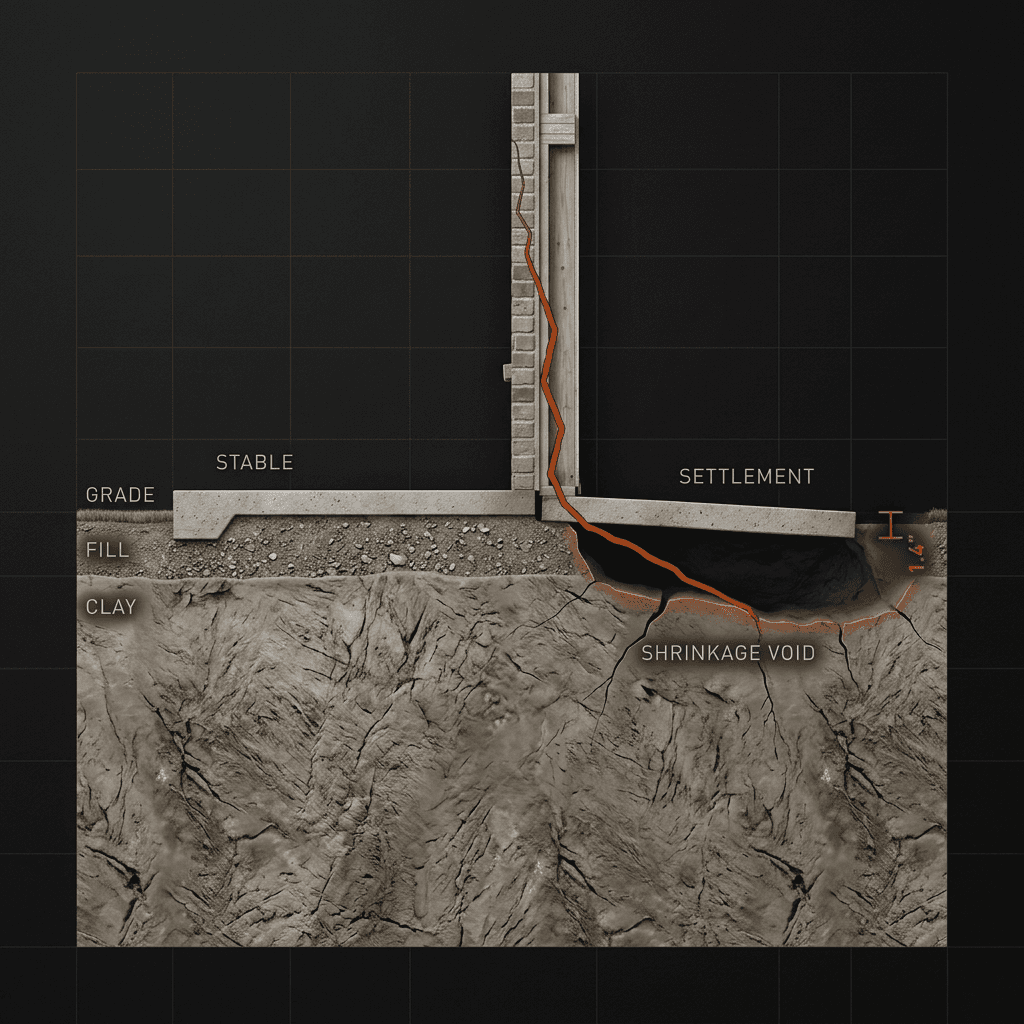
Typical Houston failure mode: clay under one side of the slab desiccates during drought, the slab follows it down, and the crack telegraphs up through the wall above.

Every drought that cracks the clay ends the same way: a storm that swells it back — and the slab moves again, in the other direction.
That cycle is why foundation damage rarely stays the same size from one season to the next.
Four signs your foundation is already moving
None of these fix themselves. Clay movement is cyclical — every wet season and every drought moves the slab a little further from where it started.
Stair-step cracks in brick
Diagonal cracks that widen as they climb usually mean one corner of the slab has dropped relative to the rest.
Doors that stopped latching
A door that swung fine last spring and binds now is the frame racking out of square — the fastest early tell.
Floors that slope or bounce
A marble that rolls on its own, or a floor that flexes underfoot, points at settlement or failing supports.
Gaps opening at trim
Baseboards or crown molding separating from the wall means the structure is moving faster than the finishes.
Most of these trace back to slab movement. See how slab foundation repair works. Want numbers first? See what foundation repair costs in Houston.
Measured, engineered, permitted, verified
The same process on every job since 2018 — 8 years of Houston clay, and it hasn't gotten less aggressive.
Elevation survey
We shoot floor elevations across the whole slab and map the actual movement — not a walk-around guess.
Engineered scope
Pier count and placement are set against the survey, then reviewed by a licensed structural engineer.
Permit and repair
We pull the permit, coordinate the crew, and lift on a schedule you approve before anyone breaks ground.
Post-lift verification
A second elevation survey documents what moved and by how much. You keep both sets of numbers.
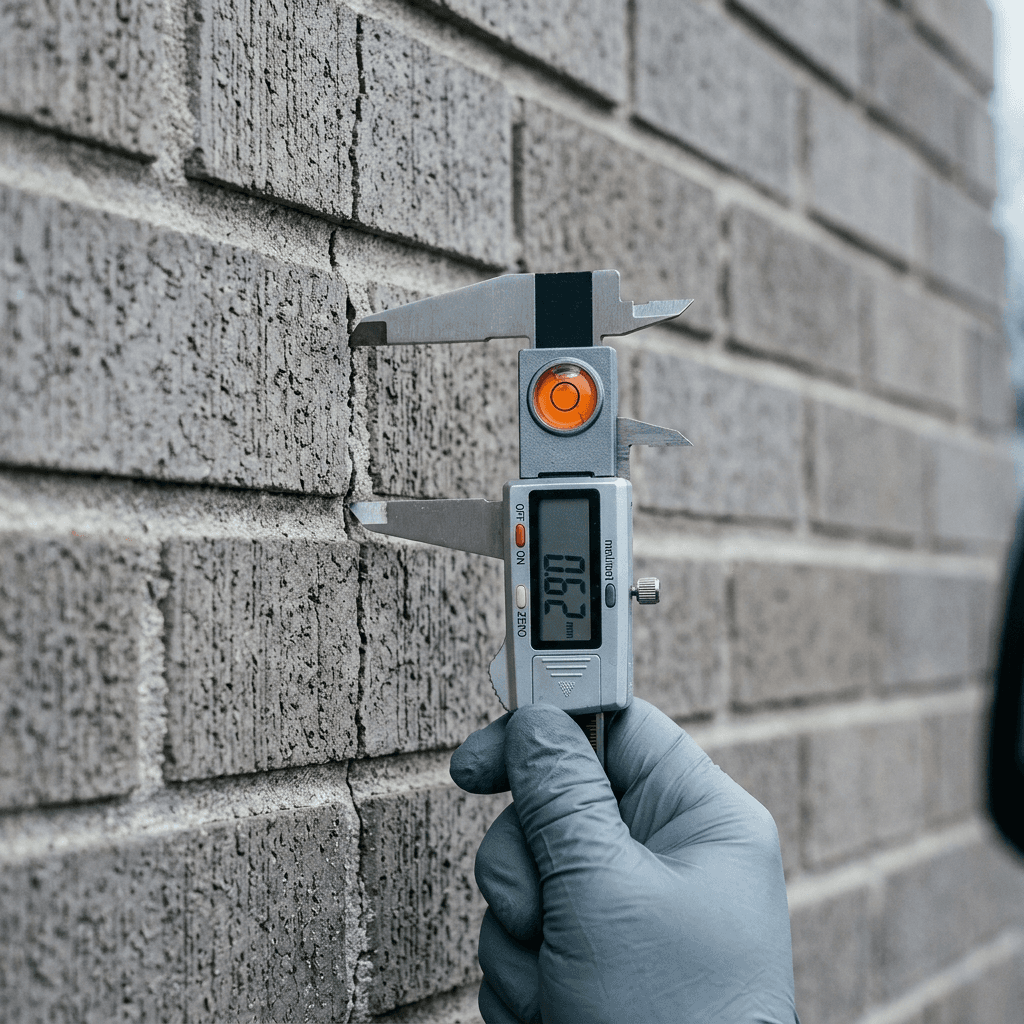
Step 01 in practice — a measured crack width, not an eyeballed one. The number on the caliper is what the engineered scope gets built around.
What Houston homeowners say
They shot elevations across the whole slab before quoting anything. Turned out the drop was worse on the back corner than we thought, and they showed me the numbers instead of just telling me. Twelve piers, done in two days, and the doors close again.
Our 1930s bungalow had floors you could feel rolling under you. They releveled the piers, replaced four that had rotted out, and put in a vapor barrier while they were under there. Honest about what needed doing and what didn't.
Got three quotes. The other two just walked the house and threw out a number. These guys surveyed it and explained the clay was pulling away on the west side because of how the yard drains. Fixed the drainage as part of the same job.
The financing is what made it possible for us to do it now instead of waiting another year and letting it get worse. No money down, and the crew was in and out without tearing up the landscaping.
Where we work
Soil behaves differently across the metro. Pick your area for what we actually see there.
Find out what it's actually doing
The evaluation is a real elevation survey, not a sales visit with a flashlight. You get the numbers whether or not you hire us.
- Floor elevation survey across the full slab
- Written findings with measured deltas
- Repair scope and pier count, if any are needed
- Financing options before you decide